Prompts
ChatGPT Photo Prompts: Clear Structure, Examples and Revisions
Write clear ChatGPT photo prompts for subject, lighting and composition. Use specific examples and revise one decision at a time.

Write clear ChatGPT photo prompts for subject, lighting and composition. Use specific examples and revise one decision at a time.
Turn inspiration into images and videos with Cuta. Start creating for free.
A useful ChatGPT photo prompt defines the subject, setting, composition, light and constraints. The goal is a clear photographic-looking concept, not a collection of camera buzzwords. A generated image remains constructed imagery even when it resembles a photograph.
OpenAI's current guidance allows creating an image from a description or uploading an image and describing an edit. It also notes that selected edits can extend beyond the selected area. OpenAI image guidance. The guidance was checked on October 7, 2026.
| Part | Question |
|---|---|
| Subject | What must the viewer recognize? |
| Setting | Where does the subject belong? |
| Composition | What is large, small or left open? |
| Light | Which direction and shadow quality matter? |
| Constraints | What must stay accurate or unchanged? |
Use exact requirements when they matter and leave unimportant choices open. Too many conflicting directions make the intended image harder to judge.
Create a photographic-looking image of one plain blue ceramic mug on a warm-white tabletop. Three-quarter view, handle fully visible, soft window light from the left, a restrained grounding shadow. Leave quiet space on the right for text added later. No additional objects or lettering.
For a real product, upload an authorized reference and specify its stable shape and color. Review whether the handle, rim and proportions remain faithful. Do not use an invented attractive mug as a factual product image.
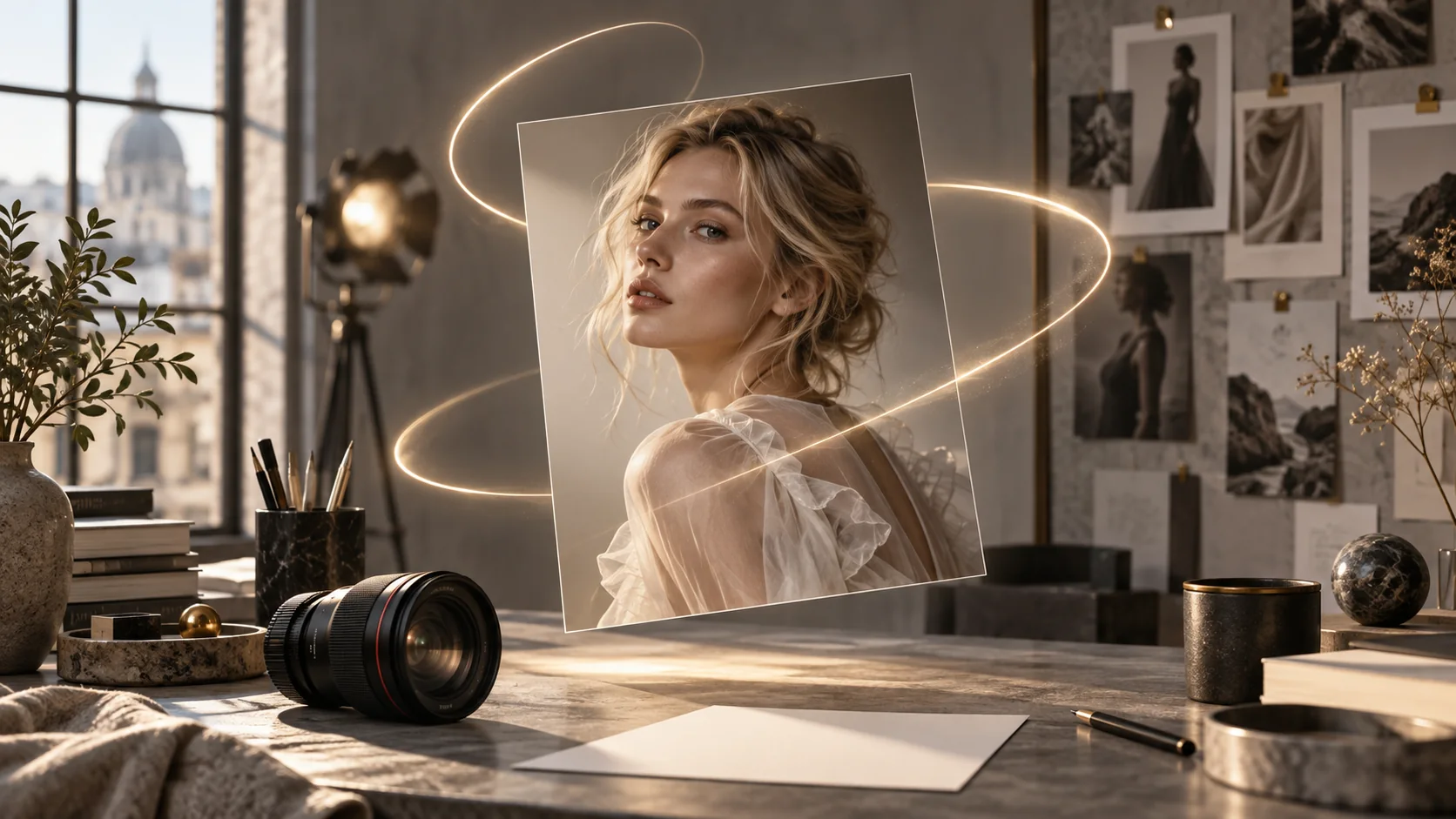
Create an editorial portrait concept of an adult with Western/European facial features seated beside a window. Calm expression, natural skin texture, eye-level view, soft side light, quiet neutral background. Keep the hands outside the frame and leave a little space around the head.
This is a fictional concept prompt, not a claim of a photographed person or an instruction to preserve a real identity without a reference.
“Make a premium product photo” leaves the composition undefined. Replace it with the mug prompt's subject, light and text-space requirements. If the first result has a busy background, revise only that part: “Keep the mug and camera view; simplify the background to a plain warm-white field.”
If the source is a real image, compare the edited region and the supposedly unchanged region. A local edit can still affect nearby details. Preserve the original and make separate versions.
Check the silhouette, light direction, material, hands or faces, and any unintended text. View the output at its final size as well as close up. Camera terminology in a prompt does not establish actual optical settings or a recorded scene.
You can adapt the same structured brief in Cuta's image workspace. Keep the tool and model behavior distinct, and finish exact typography, brand colors and factual product details in a controlled workflow.
Suppose an original product concept has the correct cup shape but the wrong light. Keep the shape, framing and background instructions, and change the light sentence. Adding several style adjectives can accidentally change the finish or invent extra objects while leaving the actual lighting problem unresolved.
A useful revision says that a broad source should illuminate the left side and that the label must remain readable. If the composition is the problem instead, describe the cup position and the empty title area. Keep exact labels as a separate finishing task. Saving the source and both prompts lets you explain what you asked to change without claiming that a wording change guarantees the result.
| Revision goal | Instruction to isolate | Observation |
|---|---|---|
| Light | Broad left-side source, readable label | Record shadow changes |
| Composition | Cup below center, quiet title area | Note object position |
| Fidelity | Preserve handle and existing product details | Mark unsupported changes |
Download the image prompt revision record as an editable CSV. Fill the observation column with your own project notes.