Full Shots: Frame the Whole Body with Purpose
Frame a full shot from head to feet while retaining useful setting and action. Plan subject placement with an editable shot worksheet.
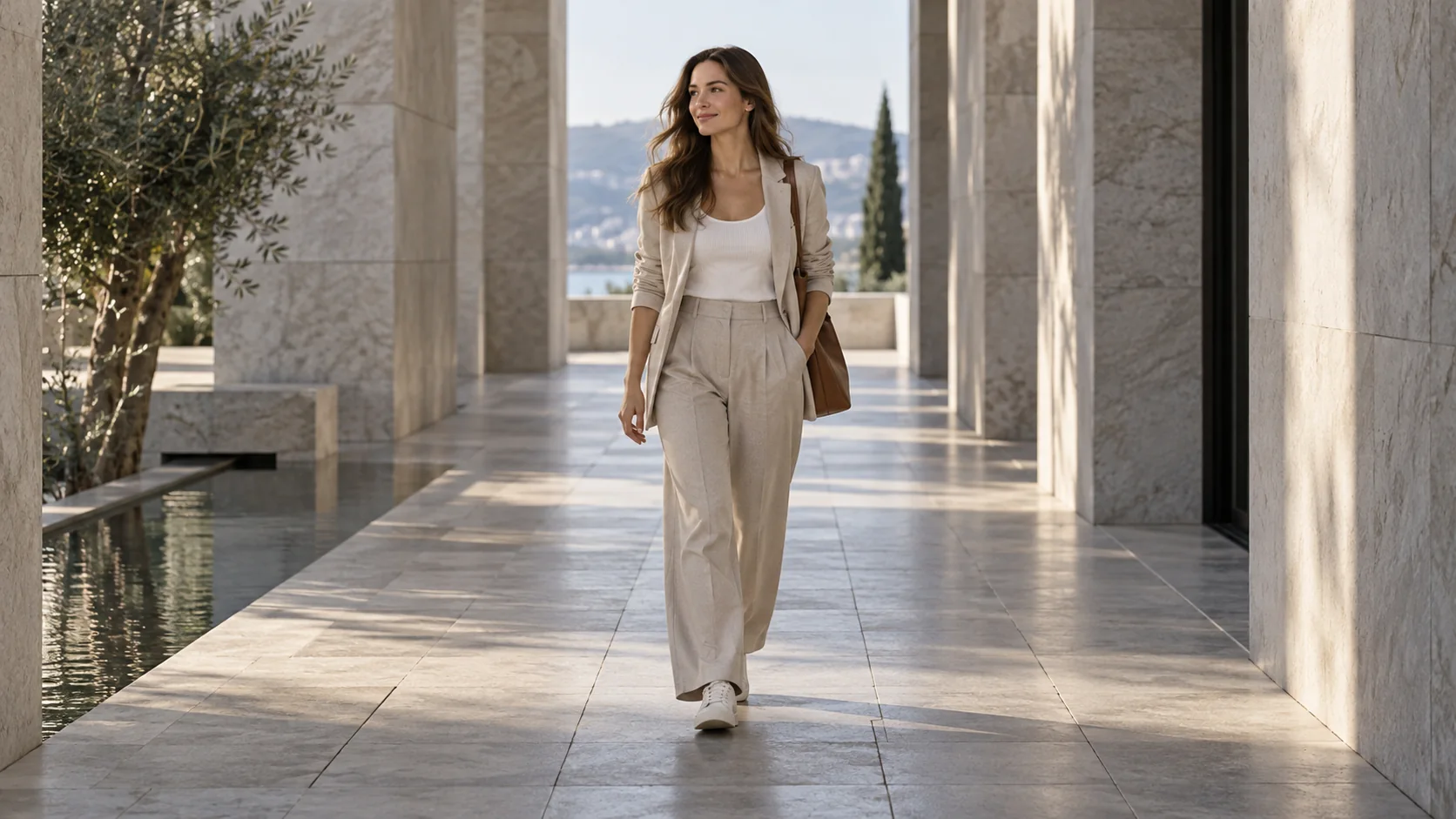
A full shot shows a person's whole body within the frame. It can explain posture, movement and the relationship between a character and the immediate setting. It is defined by framing, not one fixed focal length.
Give the action room
Decide whether the scene needs feet, hands, props and surrounding space. A full shot should show the body clearly without making it too small to read.
Set up the image
- Frame the head and feet with a deliberate margin.
- Check whether hands or props approach the edge during the action.
- Choose camera height according to the intended body proportions.
- Allow space in the direction of travel or attention.
- Review a short movement through the entire frame, not only the starting pose.
Worked exercise: a character collecting a bag
Start with the person and bag fully visible. As the person bends and lifts the bag, keep the feet and the moving hand in frame. The full shot explains the physical action that a tighter face shot would omit.
Diagnose the failure
Too much headroom makes the body small without adding useful context. A frame that is full only at the start can cut off a hand during movement. Rehearse the action and adjust the frame around its widest extent.
Decide whether the technique fits
Use a closer shot when expression is the essential information, and a wider view when the location matters more than the body detail.
Give the feet an actual role
A full shot is useful when stance, movement or the relationship to a room matters. In a scene where a character enters with a heavy bag, the entire body lets the viewer read the load, the path and the stopping point. Merely including the shoes does not make the shot informative.
Rehearse the action through the frame, including the moment the character bends or turns. Leave enough space for the real gesture while avoiding excessive empty ceiling. If the scene ends with a hand finding a key, add closer coverage for that detail rather than expecting the full shot to explain everything.
| Blocking moment | Coverage requirement | Observation |
|---|---|---|
| Entrance | Complete body and visible path | Mark head and foot clearance |
| Stop with bag | Readable stance and prop | Note weight-bearing pose |
| Small key action | Additional closer view if needed | Record coverage transition |
Download the full-shot blocking sheet as an editable CSV. Fill the observation column with your own project notes.